One of the questions I hear most often after sharing camping photos is surprisingly simple:
“What gear do you actually bring?”
The answer isn’t a truck overflowing with expensive equipment or every gadget marketed toward overlanders. Over time, we’ve learned that successful dispersed camping isn’t about packing more—it’s about packing smarter.
Every item we bring has earned its place through real trips, forgotten necessities, unexpected vehicle repairs, and lessons learned the hard way.
This is the gear we relied on during our three-day dispersed camping trip in San Bernardino National Forest, and it’s become the foundation for nearly every off-grid adventure we take.
Camp Setup
Our campsite serves as our kitchen, living room, dining room, and bedroom all at once. Creating a comfortable base camp makes it easier to relax and spend more time enjoying the outdoors instead of constantly reorganizing gear.
For shelter and camp comfort, we packed:
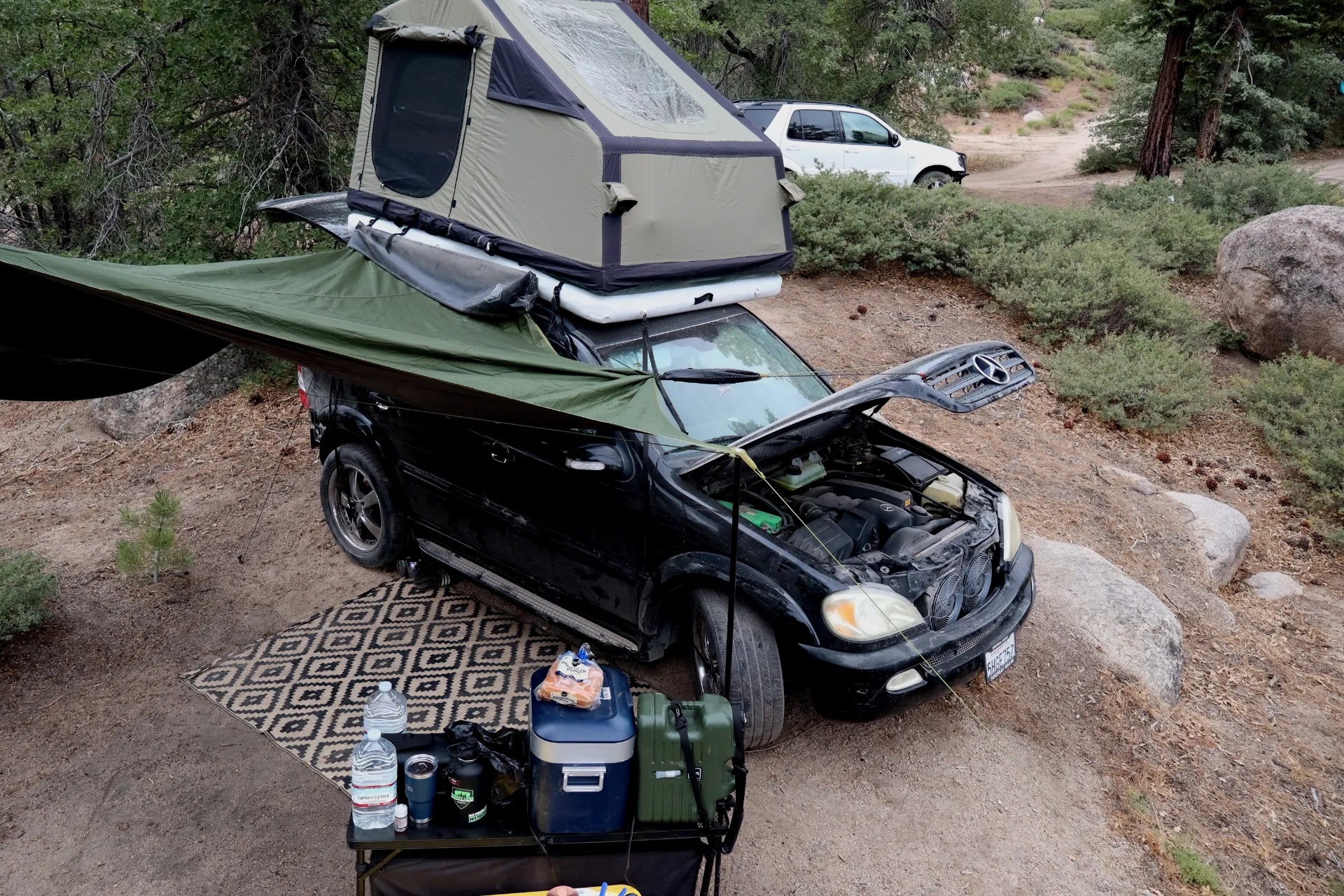
- Inflatable rooftop tent
- Vehicle-mounted awning
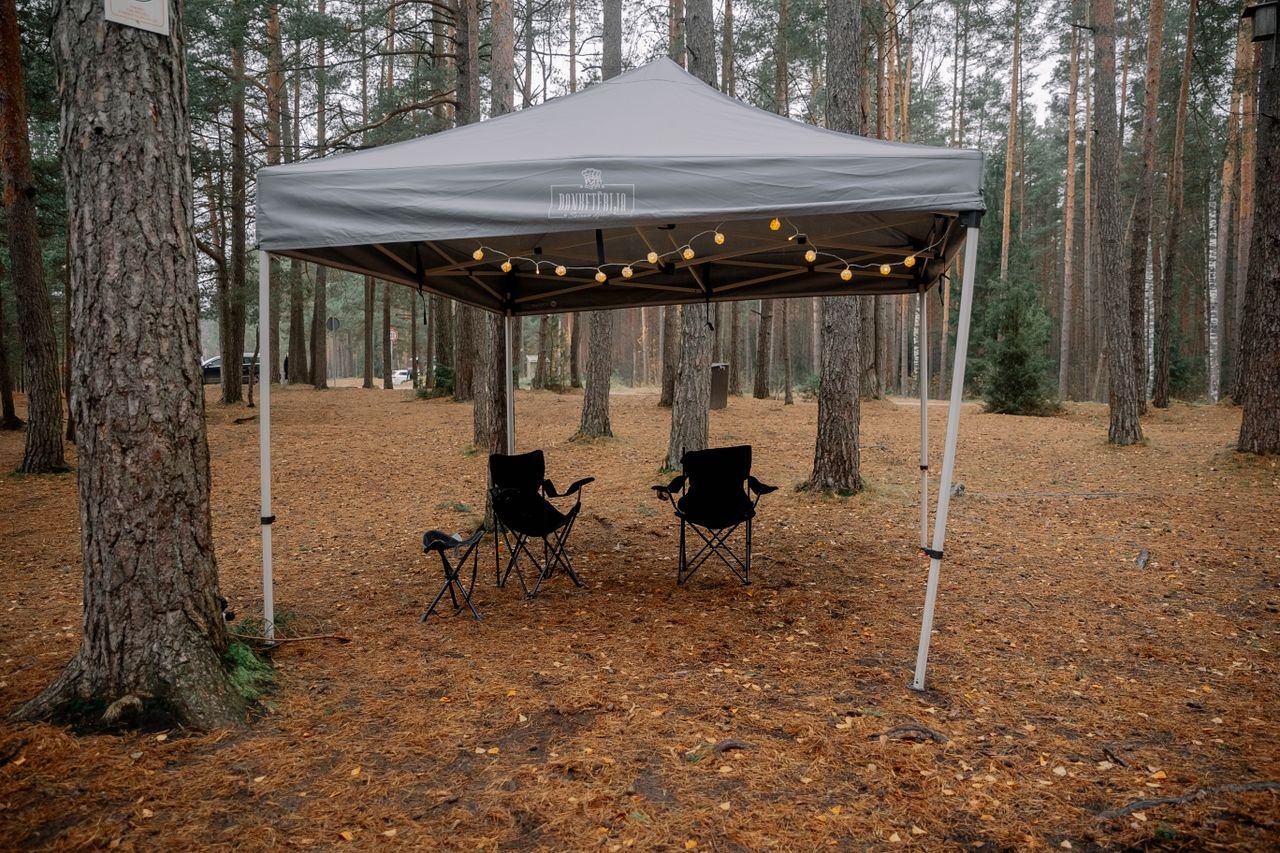
- Three camping chairs
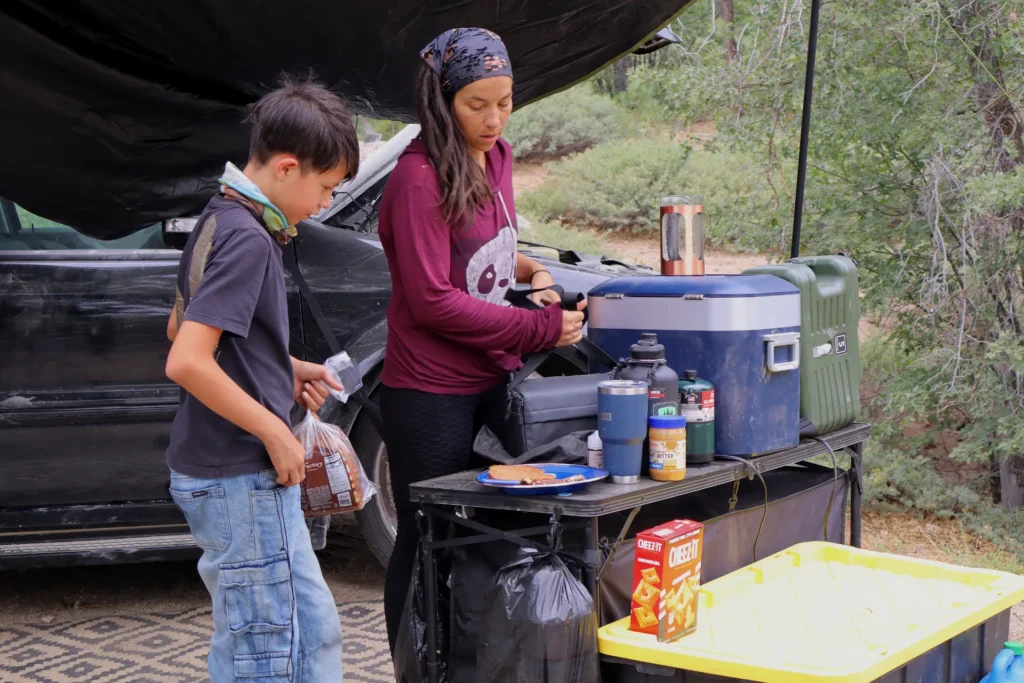
- Folding camp kitchen with pantry storage
- Family room rug (an unexpected luxury that quickly became one of our favorite additions)
The rug deserves a special mention.
Initially, I questioned whether it was worth bringing something that seemed so unnecessary. Once camp was set up, however, having a clean place to stand, cook, and relax instead of bare dirt completely changed the feel of our campsite.
Sometimes comfort is just as important as capability.
Camp Kitchen
A well-organized camp kitchen makes every meal easier.
Our cooking setup included:
- Cookware (pots and pans)
- Portable propane stove
- Mini propane tank
- Cooking utensils
- Five-gallon potable water container
- Low-power portable refrigerator
Morning coffee surrounded by pine trees has become one of my favorite parts of camping. It’s a reminder that simple routines somehow feel more meaningful when you’re miles away from home.
Recovery and Emergency Equipment
When camping off-grid, being self-sufficient isn’t optional.
Our emergency gear always includes:
- Portable tire inflator
- Portable tool kit
- Emergency SOS device
- Comprehensive first aid kit
- Axe
- Machete
- Shovel
Ironically, this trip proved exactly why carrying tools matters.
Shortly after arriving at camp, our ML350’s upper radiator hose disconnected from the radiator and sprayed coolant throughout the engine bay. Thankfully, it happened after we reached camp instead of somewhere along a remote forest road.
A basic tool kit turned what could have ended the trip into a relatively quick repair.
Lighting and Power
Evenings around camp become much easier when you’re prepared after sunset.
We packed:
- Enginstar portable power station
- Four Eveready flashlights
Reliable lighting makes everything safer—from preparing dinner to finding gear after dark.
Sleeping Gear
Good sleep makes every adventure more enjoyable.
For this trip we packed:
- Three sleeping bags
- Pillows
- Bedding
Combined with the rooftop tent, it created a surprisingly comfortable place to recharge after long days exploring.
Camping with Pets
Our adventures wouldn’t feel complete without bringing the whole family.
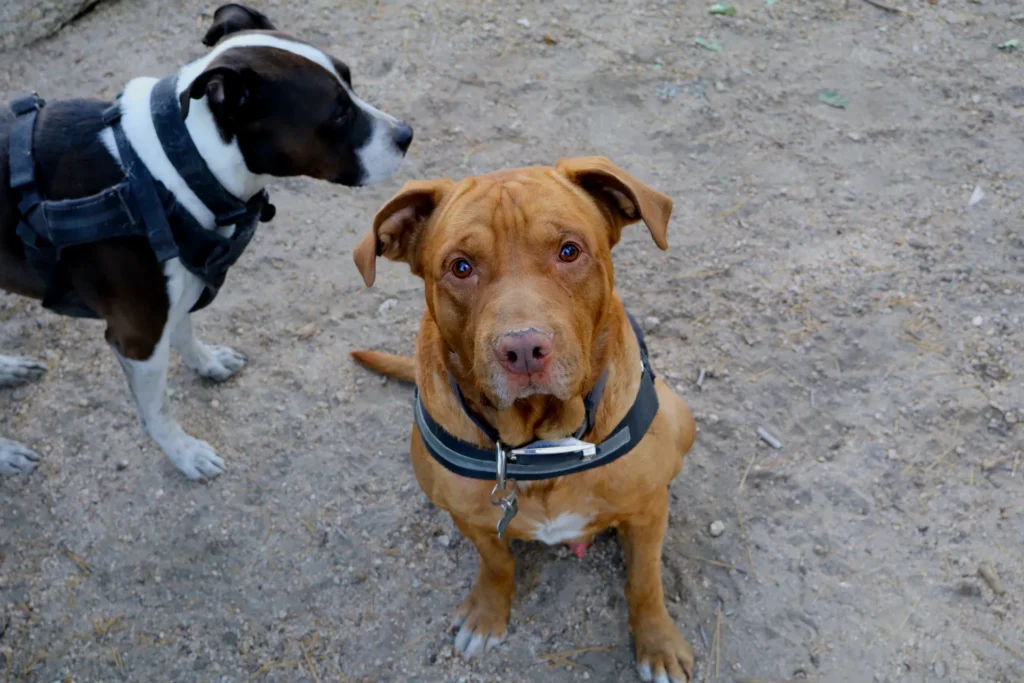
For our dogs and cat, we packed:
- Food
- Water
- Harnesses
- Leashes
- Travel essentials
Yes, our cat comes camping too.
He’s always harnessed and supervised, but watching him cautiously explore the forest has become one of the more entertaining parts of our trips.
What We Learned
Every camping trip teaches us something new.
This one reinforced a few simple lessons:
- Pack tools, even if you hope you won’t need them.
- Organization saves time at camp.
- Bring more water than you think you’ll need.
- Never underestimate the value of small comforts.
- Practice Leave No Trace principles every time you camp.
Perhaps the biggest takeaway is that there isn’t one perfect camping checklist.
Your gear should evolve with every trip. Keep what you actually use. Leave behind what stays packed away. Over time, your setup becomes uniquely yours.
Final Thoughts
The best camping gear isn’t necessarily the newest or the most expensive.
It’s the equipment you trust because it’s been tested through cold mornings, dusty forest roads, unexpected repairs, and countless evenings around the campfire.
Every trip helps refine the list a little more.
And honestly, that’s part of the adventure.